A single letter — "W" — sold for HK$26 million (roughly US$3.3 million) at a Hong Kong license plate auction in March 2021. Not a sports car. Not a piece of real estate. A letter on a metal plate. That price wasn't arbitrary; it was phonology doing the heavy lifting, the same force that shapes which phone numbers Hong Kongers will pay a premium for and which combinations they won't touch.
Cantonese number lore runs deeper and, frankly, more intricate than most outsiders realize. The rules aren't just "8 good, 4 bad." They're a layered phonetic grammar — and once you understand it, auction results, building floor plans, and phone number price tags all start making perfect sense.
The Lucky Side of the Ledger
In Cantonese, 8 (發, faat3) and 3 (生, saang1) are the headline lucky numbers, with 6 (祿, luk6) and 9 (久, gau2) close behind. Each one earns its status phonetically:
-
3 (生): Sounds like "birth" or "life." Associated with growth, beginnings, and vitality.
-
8 (發): The word for "eight" sounds similar to the word meaning "prosper" or "wealth" — in Cantonese specifically, baat3 rhymes with faat3, the verb for getting rich.
-
9 (久): Sounds like longevity (gau2), making it a staple at weddings — a wish for the couple to stay together for a lifetime.
-
6 (祿): Sounds like 祿, the middle of the three Taoist blessings — blessings (福), status (祿), and longevity (壽). A top pick among business owners.
Combinations amplify the meaning. 328 reads as 生意發 — "business prospers." 3388 becomes 生生發發 — "life and prosperity, doubled." And then there's 168: Chinese consider 168 a lucky number because 一六八 is roughly homophonous with "一路發," meaning "fortune all the way" or, as the US Mint has described it, "Prosperity Forever." You'll find 168 on business signage, hotlines, and property developments across Hong Kong and the wider Cantonese diaspora.
1314 takes a different emotional register — romantic rather than commercial. Read aloud, 1314 sounds like 一生一世 (yī shēng yī shì), meaning "one life, one world" — effectively "forever." It's the numerical equivalent of a love letter, common on wedding invitations and couples' matching phone numbers.
The Unlucky Side: Where It Gets Specifically Cantonese
In Cantonese, four (sei3 四) sounds similar to the word for death (sei2 死), and is thus considered unlucky. That much is well-known. What's less appreciated outside Hong Kong is how Cantonese phonology creates a second, more severe tier of cursed numbers.
14 and 24 are considered even more unlucky than four on its own. 14 (sap6 sei3 十四) sounds like "will certainly die" (sat6 sei2 實死), while 24 (ji6 sei3 二四) sounds like "easily dies" (ji6 sei2 易死).
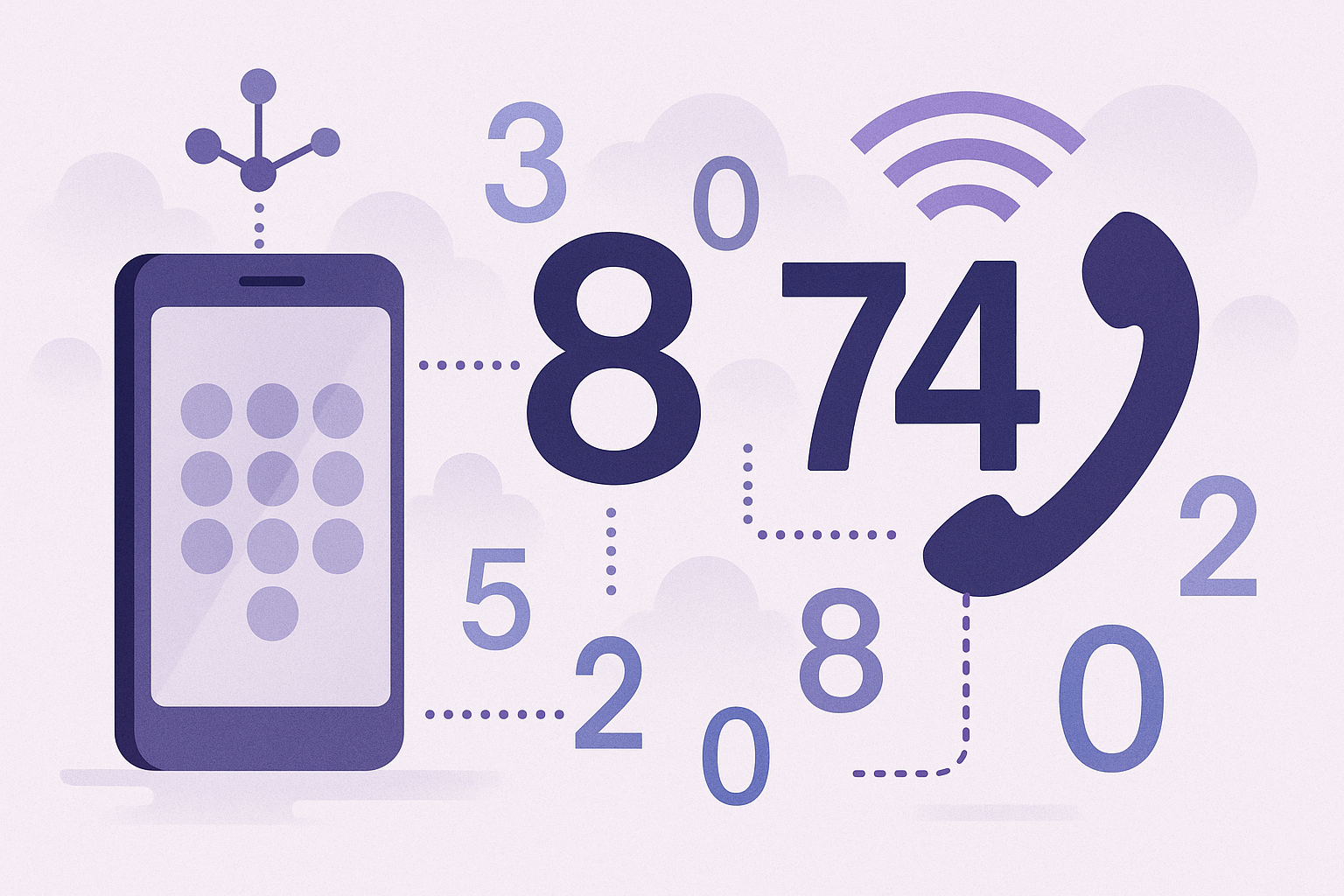
That brings us to 74 — the combination that makes Hong Kongers visibly flinch. The number 10 (sap in Cantonese) resembles the adverb 實 (sat), meaning "definitely." So 14 (十四) becomes "definite death" (實死), and by extension, 74 — where 7 and 4 read together as chat sei — carries similarly fatal phonetic baggage. A phone number ending in 74 is essentially unsellable in Hong Kong at any reasonable price.
The avoidance of 4 extends to phone numbers, security numbers, business cards, addresses, and ID numbers.
In Hong Kong, some buildings skip floors containing the digit, and it's not uncommon to find high-rises that lack a 4th, 14th, or 24th floor — or even the entire 40–49 range in particularly tall towers.
Seven: The Complicated One
Seven doesn't fit neatly into either column. It isn't always considered bad, but it carries spooky undertones. The 7th month of the lunar calendar is Ghost Month (鬼月), when spirits are said to roam freely — yet 7 can still register as positive in other contexts.
It is also linked with mourning rituals. The practical upshot for phone number buyers: 7 is a number you deploy carefully. It's not poison like 4, but pairing it with another edgy digit — say, 74 — creates a combination most buyers will skip entirely.
The Auction Market: Phonology Priced in HK Dollars
Hong Kong's Transport Department holds regular license plate auctions, and the sums bid there are the clearest evidence that this isn't casual superstition — it's a market with real price discovery.
The plate "18" — which in Cantonese reads as 實發, "definitely will get rich" — sold at auction for HK$16.5 million in 2008, while "9" (longevity) fetched HK$13 million as far back as 1994.
In 2016, "28" sold for HK$18.1 million — a record at the time — because in Cantonese, two sounds like "easy," making 28 read as "easy to prosper."
Then the single-letter era took over. The record was set in March 2021, when one bidder spent HK$26 million (US$3.3 million) for a plate bearing a single letter: "W."
At a subsequent Lunar New Year auction, "R" sold for HK$25.5 million (US$3.2 million).
The letter "D" fetched HK$20.2 million — associated with the words "dragon" and "dollar," representing power and wealth in Chinese culture. Most recently, after 90 bids at the February 2026 auction, the "H" plate secured for HK$20 million — the fourth-highest price on record.
Funds raised through these auctions, after deducting operating expenses, flow to the Lotteries Fund — a government body that finances social welfare projects and services. Lucky number fever is, indirectly, funding Hong Kong's public good.
The phone number secondary market tells a similar story. In Sham Shui Po — Hong Kong's electronics district — vendors post sheets of numbers on walls, each priced by auspiciousness. These dealers operate much like stockbrokers, but trade in lucky digits rather than shares.
A Concrete Example: Reading 9988 Like a Hong Konger
Take the phone number suffix 9988. Walk through it in Cantonese: 9 = longevity, 9 = longevity again (doubled), 8 = prosperity, 8 = prosperity again. That string reads as a wish for long life and enduring wealth — twice over. It's the kind of suffix that sells fast and commands a significant premium. Flip it to 9944 and you get the opposite: longevity + longevity + death + death. That number sits unsold.
The same four digits. Completely opposite fates. That's Cantonese phonology as a pricing mechanism.
What the Auctions Actually Reveal
The record bids aren't just about superstition. They signal status. Phone users — especially companies seeking to impress clients and business partners — often pay a premium for combinations of digits considered lucky. A HK$20 million license plate tells every driver stuck behind you in Kowloon traffic exactly what kind of person you are. There's always the "cool factor" as motivation — you get to flaunt your unique number plate around the city, and given the slow pace through heavy traffic during rush hour, plenty of people will have time to admire it.
The deeper point is that Cantonese number culture is a living linguistic system, not a museum piece. New combinations get coined; existing ones get re-evaluated when cultural events shift their connotations. It keeps the market moving.
Quick Takeaways
- 3 (生), 8 (發), 9 (久), and 6 (祿) are the four core lucky digits in Cantonese number culture.
- 4 (死) is the primary unlucky number; 14 and 74 intensify that meaning to "certain death."
- 168 = "fortune all the way"; 1314 = "forever" (romantic); 18 = "definitely get rich."
- 7 is contextually unlucky — especially during the lunar 7th month — but not as universally avoided as 4.
- Hong Kong's Lunar New Year license plate auctions are the world's clearest price signal for cultural number value, with the all-time record standing at HK$26 million for a single letter ("W," 2021).
- The phone number secondary market in Sham Shui Po operates on the same phonetic logic, with street vendors pricing every suffix by its Cantonese sound value.
If you want to see what these phonetic rules look like when applied to real phone numbers for sale — sequences built around 8s, 9s, and 3s, and carefully cleared of 4s — you can browse current inventory at GreatNumber.